html
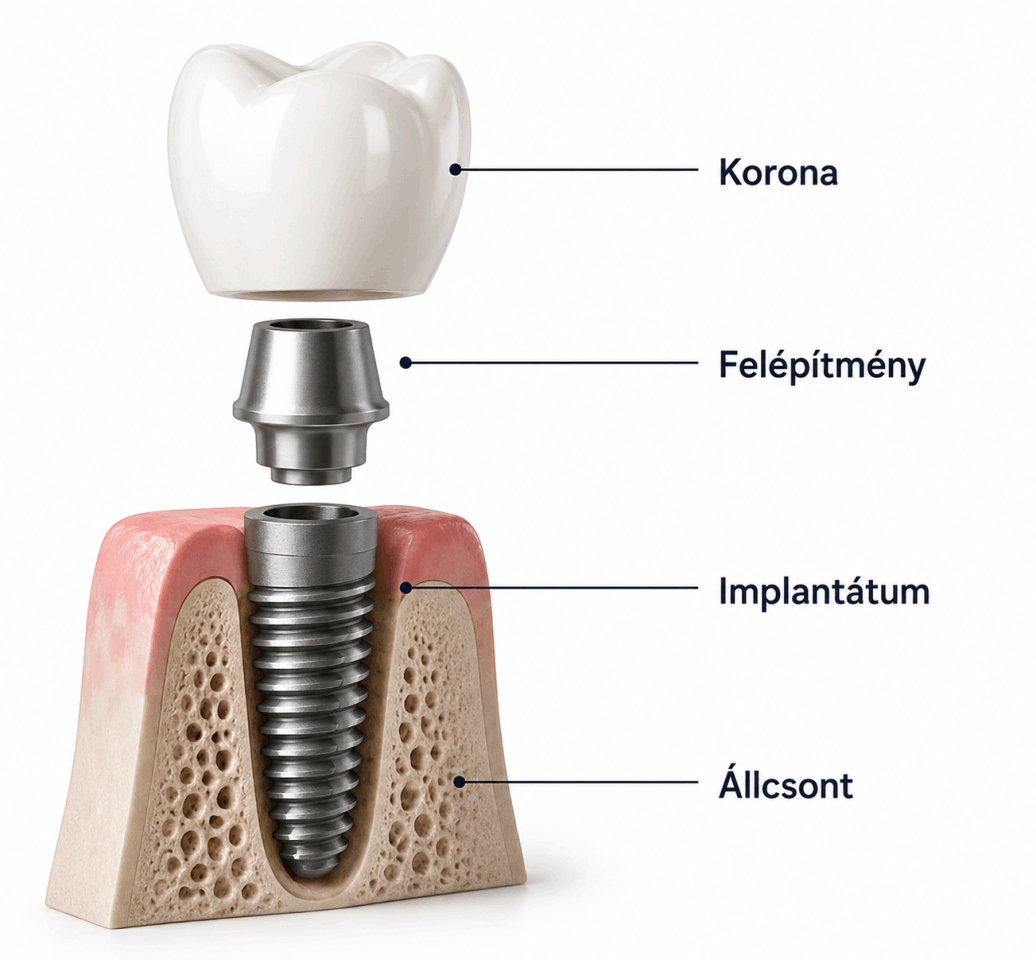
An implant is an artificial titanium root placed in the jawbone, providing a stable foundation for a crown or bridge, similar to a natural tooth.
A dental implant is an artificial tooth root placed in the jawbone to replace a missing tooth. It is made of biocompatible titanium, which can integrate firmly with bone tissue and provide a highly stable foundation for a crown, bridge or even a full fixed restoration.
Like a natural tooth, an implant is anchored in the bone and transfers chewing forces evenly to the jawbone. This helps preserve bone volume, improves chewing function and keeps the restoration looking natural.
With modern digital CBCT planning, implant positions can be determined with millimetre accuracy. This means greater safety, more predictable results and long-term stability.
With proper oral hygiene and regular check-ups, a well-integrated implant can function reliably for decades, which is why it is one of the most modern and durable solutions for replacing missing teeth.
✔ Healthy teeth do not need to be prepared
✔ Helps preserve bone volume
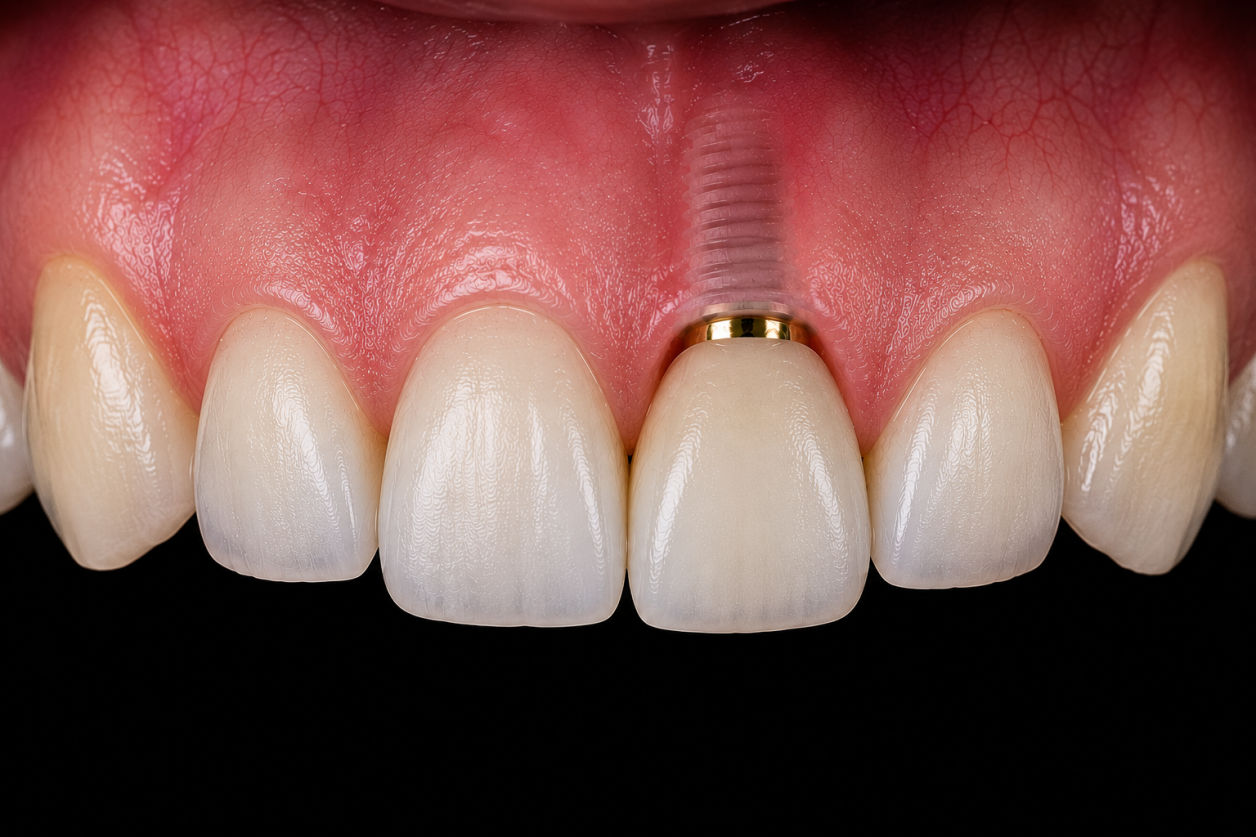
✔ More natural appearance
✔ Easier to clean
✔ Long-term solution
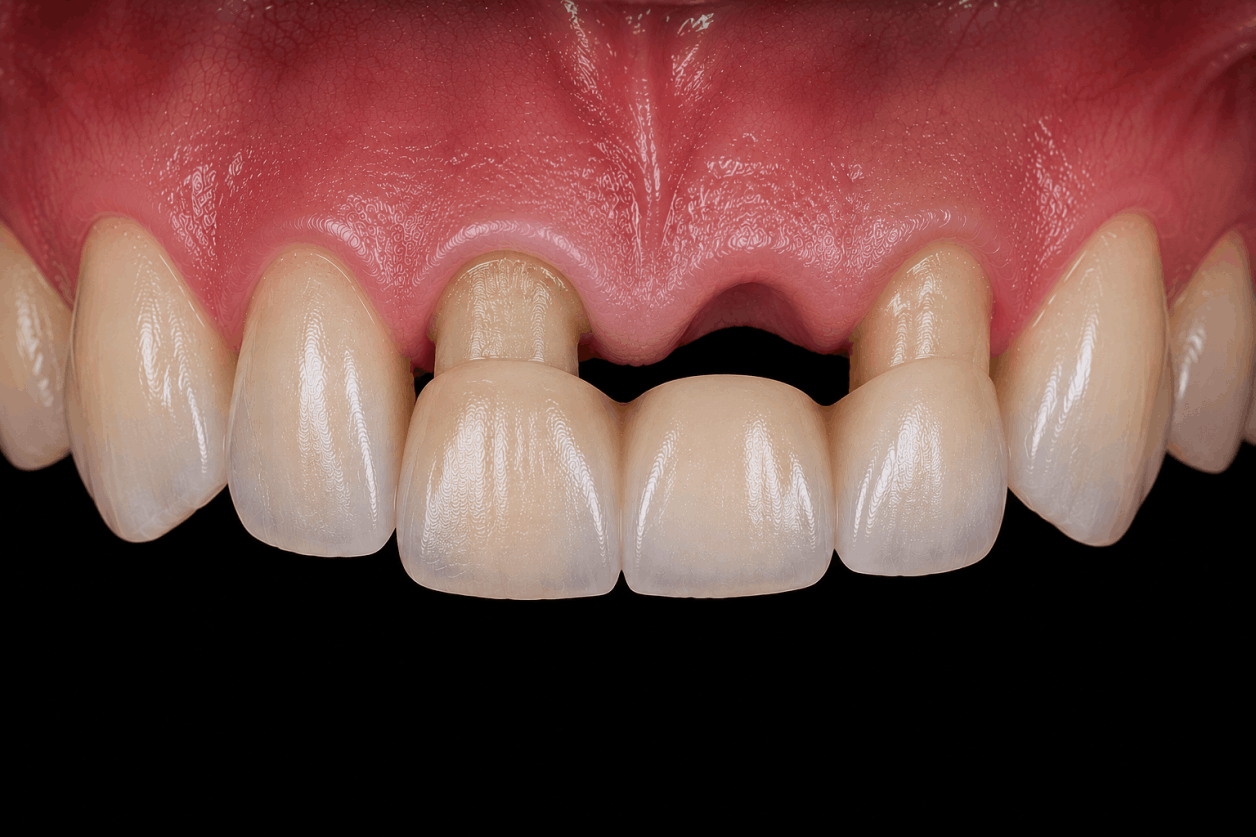
✖ Healthy teeth must be prepared
✖ Bone may continue to resorb
✖ More difficult to clean
✖ Teeth under the bridge may be damaged
✖ May need replacement over time
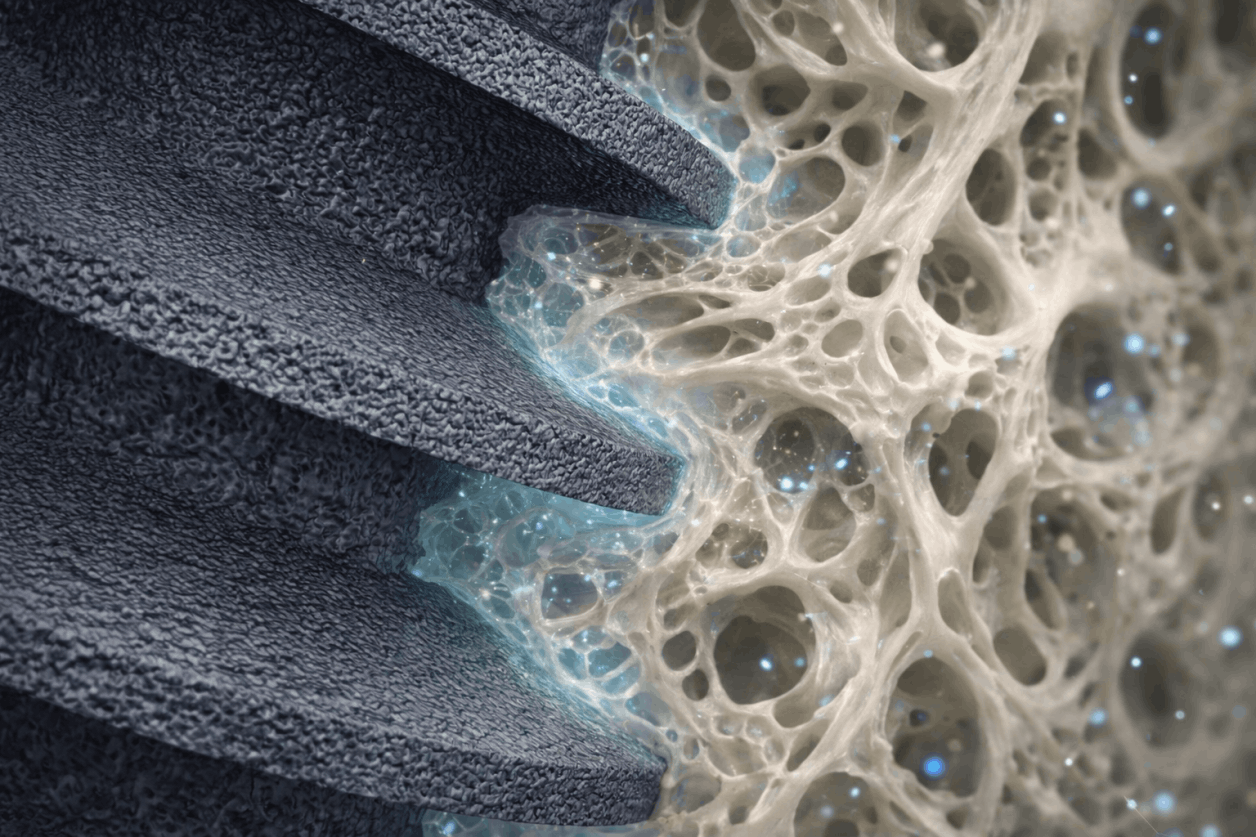
The long-term success of a dental implant is based on osseointegration: the biological integration between the implant and the jawbone. During healing, bone cells gradually grow onto the specially designed SLA surface of the Grade 4 titanium implant, making it a stable part of the bone.
As a result, the implant is not just an artificial screw; like a natural tooth root, it can withstand chewing forces while helping preserve jawbone volume and reduce bone resorption.
Complete integration usually takes 3–6 months and may be influenced by bone quality, general health and smoking. In selected cases, the implant can already receive a temporary fixed restoration during healing, so the patient does not need to live with a missing tooth for a long time.
Modern digital CBCT planning, precise surgical technique and high-quality implants together provide long-term success rates above 95–98%. With good oral hygiene and regular maintenance, implant-supported restorations can remain stable, reliable and aesthetic for 20–30 years or even a lifetime.
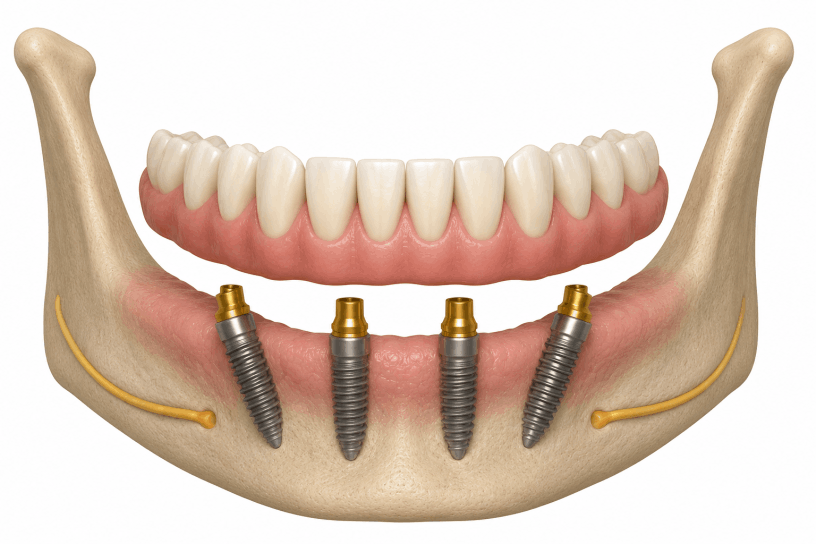
A fast, predictable solution for complete tooth loss.
A stable prosthesis fixed on four strategically placed implants; with suitable anatomy, immediate temporary fixed teeth may also be possible.
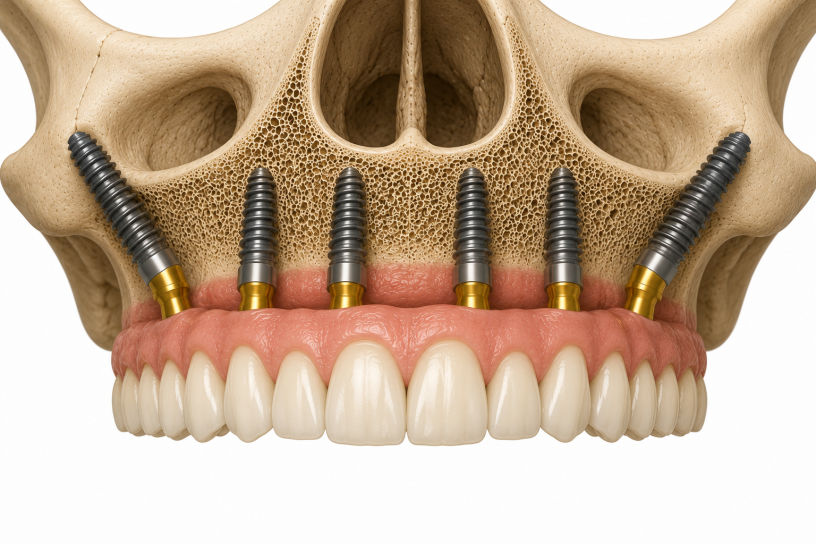
Maximum stability and long-term security.
Six implants provide optimal load distribution, excellent chewing function and a reliable basis for a premium screw-retained full-arch restoration.